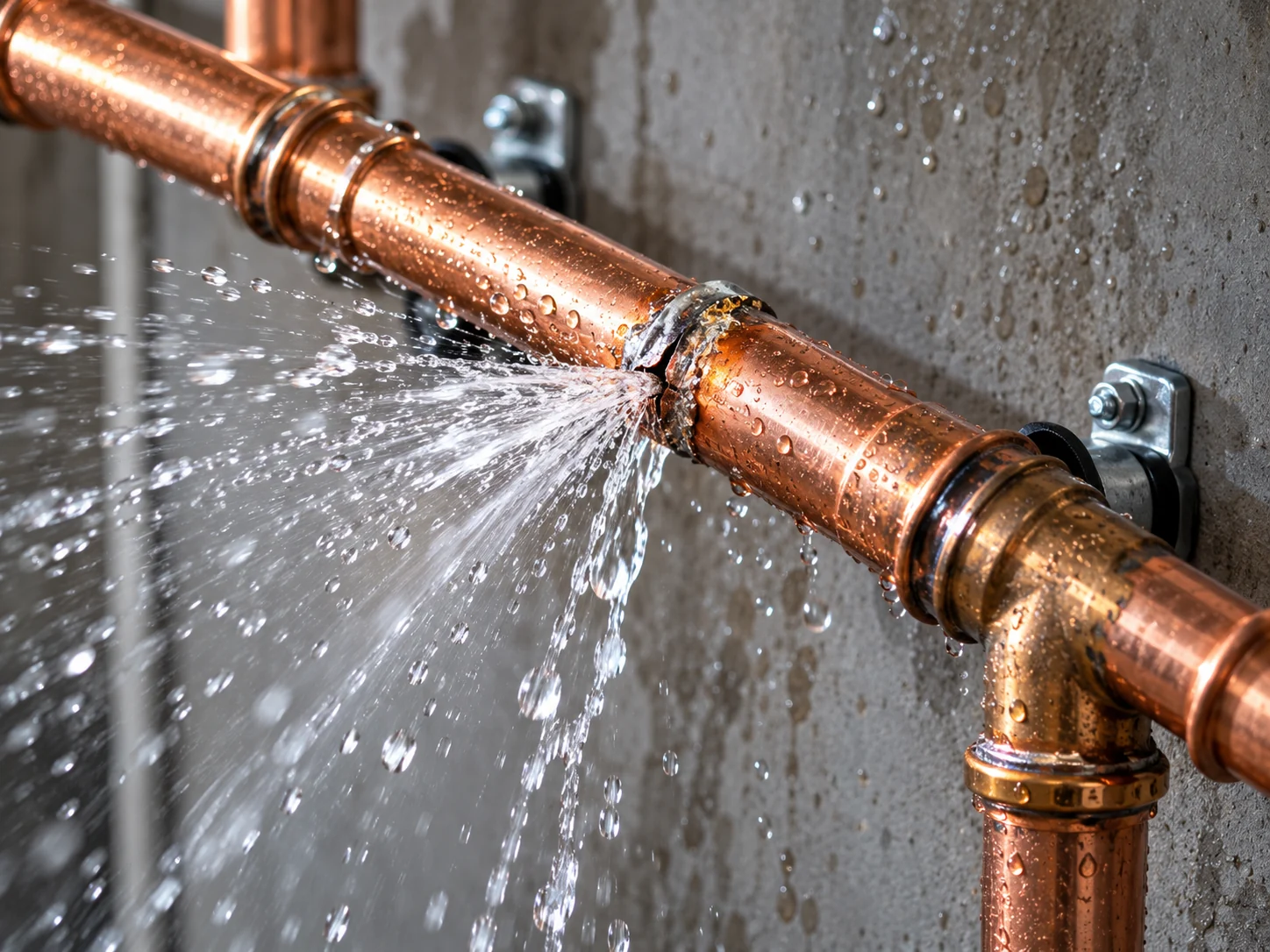
Safety first: If it is safe, isolate the water supply. Stay clear of water near electrical equipment. If the area is unsafe, move away and call emergency services if anyone is in immediate danger.
A burst pipe can go from a damp patch to a damaging flow very quickly. The first aim is simple: keep people safe, stop more water entering the property if you can do so safely, and protect what you can without putting yourself at risk.
Grade A Plumbing handles burst pipe repair enquiries for homes, rentals and commercial properties in Melbourne, VIC. For an active burst, call (02) 5837 5457 to check emergency-plumbing availability, or email support@gradeaplumbing.store with the property details and what you can see.
When a burst pipe needs urgent action
A pipe does not need to split wide open to be urgent. A steady leak behind a wall, under a floor or near electrical fittings can keep soaking building materials while remaining mostly out of sight. Acting early can limit the spread of water and give the repair work a clearer starting point.
Obvious signs include water pouring from a pipe, ceiling or wall, a sudden loss of water pressure, or water pooling where it should not be. Less obvious cases can show up as a new hissing sound, a warm patch over a hot-water line, staining, paint that bubbles, musty smells or a water meter that continues to show flow after normal water use has stopped.
If water is emerging from the road, footpath or another public area, report it to the relevant water corporation as well as protecting your own property. A leak at or outside the meter may not be private plumbing, and the water supplier can advise about its assets and responsibilities.
Common reasons pipes split or start leaking
The cause is not always visible at the break, so an inspection matters before choosing a repair.
Corrosion or thinning metal in an older copper or galvanised pipe.
Ground movement placing stress on buried pipework or joints.
A worn, poorly seated or damaged fitting, valve or connection.
Accidental damage from drilling, digging, building work or a heavy impact.
Repeated pressure changes that expose a weak join or component.
Movement where pipes pass through walls, floors or tight spaces.
Deteriorated plastic pipe or a fitting that is no longer sealing properly.
Clues that can point to hidden pipe damage
These clues do not confirm the exact fault, but they help explain why a proper leak check is worthwhile.
What you notice
What it could indicate
Sensible next step
A damp ceiling, wall or skirting
Water travelling from a concealed pipe or fixture
Keep clear of affected electrics and arrange an assessment.
Meter movement with all known water use off
A continuous flow somewhere on the property
Record the observation; do not treat it as proof of the exact location.
A warm section of floor or wall
A possible leak on a hot-water line
Avoid lifting finishes or cutting into surfaces yourself.
Low pressure at several taps
A significant leak, supply issue or another plumbing fault
Check for visible water and notify the water supplier if the issue appears external.
Soft ground or persistent wet lawn in dry weather
A buried pipe leak or irrigation problem
Keep people away from soft ground and note the area for inspection.
Musty odour, staining or peeling paint
Moisture held in building materials over time
Dry and ventilate only when safe, then investigate the source.
A meter can help flag unexpected flow, but appliances, irrigation, pool top-ups and evaporative cooling can also use water.
What to do first when water is escaping
Take only the steps that are safe for the situation. Do not delay emergency help to move heavy furniture or investigate a concealed leak.
01
Keep people out of the wet area
Move children, pets and anyone not helping away from the water. Avoid slippery floors, sagging ceilings and places where water could contact electrical outlets, cords or appliances.
02
Isolate the water supply if it is safe
Use the property’s main stop valve or the meter shut-off only if it can be reached without stepping into water or working near electricity. If you do not know which valve to use, do not force it or turn valves that may serve shared property or fire services.
03
Reduce residual water
Once the supply is off, a cold tap can be opened to let remaining water run out of the line. Place towels or containers only where the floor and surrounding area are safe to access.
04
Protect belongings and document safely
Move lightweight items clear and take photos or notes of visible damage if it is safe to do so. Do not pull back a wet ceiling, remove wall linings or lift flooring to find the leak.
05
Arrange an assessment
Tell the plumber where water was first seen, whether the main supply has been isolated, the pipe area involved and whether the property is a home, rental, strata building or workplace. This helps focus the initial inspection.
Safety comes before water clean-up
If water is near electrical outlets, appliances, switchboards or wiring, do not walk through the water or touch electrical equipment. Keep the area clear and seek urgent help if there is an immediate danger; only isolate electricity from a dry, safe location if you know it can be done safely.
A burst water pipe and a gas fault are different emergencies. If you smell gas or suspect a gas leak, leave the area, do not use electrical switches, flames or appliances, and contact your gas distributor’s emergency line or 000 from a safe place. Do not attempt gas repairs, testing or connections yourself.
Water isolation: what it can and cannot do
The main shut-off valve stops the supply of fresh water entering the private plumbing after the valve. In many houses it is near the water meter at the front boundary, but its position can vary. Apartments, shops and managed buildings may have a local isolation valve, a shared meter arrangement or restricted service areas.
Closing a safe, known valve is a practical way to reduce ongoing flow, but it does not remove the water already inside the pipework or building materials. It also does not tell you whether the break is on a branch pipe, a hot-water line, an appliance connection, irrigation or the supply side of the property.
Tenants should tell their landlord or property manager promptly and follow the property’s emergency process, while still taking reasonable safety steps. Owners and managers should share the location of known isolation points with occupants where appropriate, especially in a building with shared plumbing.
concept
FIRST RESPONSE, CAREFULLY
If safe, isolate the water supply.
If the leak is severe and it is safe to do so, use the appropriate shut-off valve. Stay clear of water near electrical equipment. If the area is unsafe, move away and call emergency services if anyone is in immediate danger.
Describe where the water is visible
Keep clear of electrical hazards
Share any recent pressure changes
Wait for an assessment before repair
HOW IT WORKS
A careful repair process.
01Call and explain the leak
02Discuss safe isolation where appropriate
03Assess pipework and access
04Review repair scope and pricing
How a concealed leak is located
A plumber normally starts with the basics: where the water appeared, which fixtures lost pressure, whether the meter suggests continuous flow, and whether the leak changes when a particular line is isolated. A visible split might be straightforward, while moisture can also travel away from the real source through a wall, floor cavity or ceiling.
Depending on access and the type of pipe, leak investigation may involve a visual inspection, pressure testing, moisture readings, acoustic listening equipment, thermal imaging or targeted access to the suspected area. These are ways of narrowing down the location; the appropriate method depends on the building, pipe material and whether the line is carrying hot or cold water.
The aim is to expose only what is needed to safely repair the damaged section, where practical. A finding should distinguish a failed pipe or joint from a leaking tap, appliance hose, hot-water unit, roof-water entry or drainage issue, because the repair path is different for each.
Repair options for copper, plastic and older pipes
The repair should suit both the material and the reason it failed. Copper water pipe may need a damaged section removed and a new section or fitting joined in. Plastic supply pipe, such as PEX or polyethylene used in some properties, needs a compatible fitting and method; older galvanised pipe can require a different approach again.
A local repair can make sense where damage is isolated and the surrounding pipe is sound. If corrosion, recurring leaks, poor access or movement affects a wider length, replacing a longer section or rerouting accessible pipework may be the more sensible option. The assessment should consider the condition of nearby pipe rather than treating every break as identical.
After a repair, the affected line needs to be checked for leaks and returned to service correctly. Plumbing work in Victoria must be carried out by a person with current registration or licence, or by a plumbing apprentice, as required by the Victorian regulator.
Limiting water damage after the pipe is fixed
Stopping the leak is only one part of the problem. Carpets, plaster, timber, cabinetry, insulation and stored items can retain moisture, and water can travel below floors or inside wall cavities. The longer materials stay wet, the more likely staining, swelling, odours and mould growth become.
Once the area is safe, remove standing water where possible and increase ventilation without using unsafe electrical equipment. A water-damage specialist may be needed where there has been substantial saturation, contaminated water, a collapsed ceiling, or moisture in inaccessible structural areas. Plumbing repair and building drying or restoration can be separate scopes of work.
Keep a simple record of the time the problem was noticed, the visible areas affected, photos taken safely and actions already performed. For renters, this gives the landlord or agent useful information; for owners and property managers, it helps coordinate the plumbing assessment and any separate restoration work.
What affects burst pipe repair cost
There is no useful one-size-fits-all price for a burst pipe. A firm price requires the work to be assessed, because a visible joint repair and a concealed leak under a slab or behind finishes involve very different access, diagnosis and restoration needs.
The pipe material, the failed part, the position of the leak, how much water must be isolated, the condition of nearby pipe and the safe access required all influence the scope. An emergency situation can also involve measures to make the area safe before the repair itself can begin.
Ask what work is included in the plumbing repair and what, if anything, sits outside it, such as locating a concealed leak, cutting and reinstating finishes, water extraction or building restoration. Clear scope information helps homeowners, landlords and managers decide the next practical step.
Practical ways to reduce future pipe problems
Not every burst can be predicted, but regular attention can reveal small problems before they spread.
Learn where the main water shut-off is and make sure responsible occupants can identify it.
Check exposed pipes, flexi hoses, taps, valves and appliance connections for drips or corrosion.
Investigate unexplained damp patches, musty smells, low pressure or unusually persistent meter flow.
Avoid drilling, trenching or digging until pipe locations have been considered.
Repair dripping fixtures and failing connections rather than letting moisture continue unnoticed.
For a vacant property, arrange sensible checks and make sure a contact person knows how to isolate water.
When renovating, have proposed changes assessed so pipework is protected and accessible where practical.
Related plumbing help
Emergency PlumbingFor urgent plumbing situations where water needs to be made safe.
Leak DetectionFor unexplained moisture or meter flow when the source is not obvious.
Commercial PlumbingFor burst-pipe issues affecting a workplace, tenancy or managed site.
All ServicesSee the broader plumbing support available for Melbourne properties.
HOW PRICING WORKS
What affects the cost of this work.
We do not publish fixed prices, because the right figure depends on what is actually found on site. These are the factors that shape a quote, and the proposed scope and price are explained before agreed work proceeds.
01Location and access to the leak
A visible pipe is usually assessed differently from one below a slab, inside a wall, above a ceiling or within a shared building service area. Safe access and any need to expose the pipe affect the scope.
02Finding the source
Where the leak is not visible, the assessment may need to distinguish a concealed pipe fault from a fixture, appliance, roof-water or drainage issue before repair work can be defined.
03Pipe material and condition
Copper, plastic and older galvanised pipe use different compatible fittings and repair approaches. Nearby corrosion, deterioration or repeated failure can make a simple local patch unsuitable.
04Extent of the repair
The work may involve a single failed fitting, a short damaged section, a longer replacement or a reroute. The appropriate extent depends on what caused the failure and the condition of surrounding pipework.
05Safety and isolation requirements
Water near electricity, hot water, difficult access, shared services or significant active flow may need safety measures and coordination before normal repair work can begin.
06Damage and reinstatement outside the pipe repair
Water extraction, drying, mould treatment, repairing ceilings or walls, and replacing finishes can be separate from repairing the plumbing. Confirm what is included in the assessed scope.
Every business prices this work differently, and the figure depends on the assessment outcome, access, parts and whether attendance is outside standard hours. Ask for the proposed scope and price before work starts.
FREQUENTLY ASKED QUESTIONS
Good questions. Clear answers.
If your situation is urgent, call first to discuss availability and the safest next step.
Is a small pipe leak really urgent?+
It can be. Even a small continuous leak may wet hidden materials, increase water use and weaken a pipe or fitting until it fails more visibly. If you can see active water, new moisture or unexplained meter flow, isolate the supply safely where possible and arrange an assessment rather than waiting for it to get worse.
How can I tell whether a pipe is leaking inside a wall?+
Signs can include staining, bubbling paint, a musty smell, a hissing sound, a warm wall or floor near a hot-water line, or a meter that records flow after normal water use stops. These signs can also have other causes, so they narrow the search but do not confirm the exact pipe or fault.
Does meter movement prove that I have a burst pipe?+
No. It can indicate continuous water use, but that use may come from an appliance, irrigation, a pool top-up, evaporative cooling or a leak. First make sure known water uses are off, then record what you observe and have the result considered alongside a proper inspection.
What should a tenant do if a pipe bursts?+
Keep people safe, isolate the water only if you know the correct valve and it is safe to reach, then notify the landlord, agent or property manager as soon as possible. Give them clear details about where the water is appearing, whether power may be affected and what steps you have already taken.
What should a property manager prepare before calling about a burst pipe?+
Have the property address, access arrangements, the location of visible water, photos if safely obtained and any information about the building’s isolation valves ready. It is also useful to say whether the affected area is vacant, tenant-occupied, shared, commercial or near electrical equipment, as this affects safe access and coordination.
Can I keep using water after I have isolated the main supply?+
No normal tap, toilet or appliance use will be available once the relevant supply is isolated. Avoid turning the water back on just to test the problem, as that can restart the leak or send water into a concealed area; the line should be assessed before it is returned to service.
Will a copper pipe repair mean replacing all of my plumbing?+
Not necessarily. A local repair may be appropriate if the failure is isolated and adjacent pipe is in good condition. If the inspection finds widespread corrosion, several previous leaks or pipework that cannot be safely accessed, a broader replacement or reroute may be discussed instead.
Will walls, floors or ceilings need to be opened?+
Sometimes targeted access is necessary to reach a concealed pipe safely, but the extent depends on where the leak is and how the building is constructed. Investigation aims to identify the likely source before opening finishes where possible, although water may have travelled away from the actual break.
Who should I call if water is coming from the street or footpath?+
Contact the relevant water corporation, particularly if the water appears to involve a public main, meter area or public space. At the same time, keep clear of the affected area and check whether water is entering your property; a private-plumbing assessment may still be needed if the source is on your side of the supply.
What if the burst pipe is part of the hot-water system?+
Treat escaping hot water as a burn risk and do not touch hot pipes, valves or a hot-water unit. Isolate water only if it is safe, keep people away from the area and explain that hot water is involved when arranging an assessment, as the source could be pipework, a fitting or the unit itself.
General plumbing, safety and compliance guidance on this page was checked against the following Australian sources. Nothing on this page replaces an on-site assessment.