A local sink blockage is different from a restriction in a shared or buried sewer drain. Overflowing wastewater or multiple affected fixtures can change the work needed to make the area safe and restore flow.
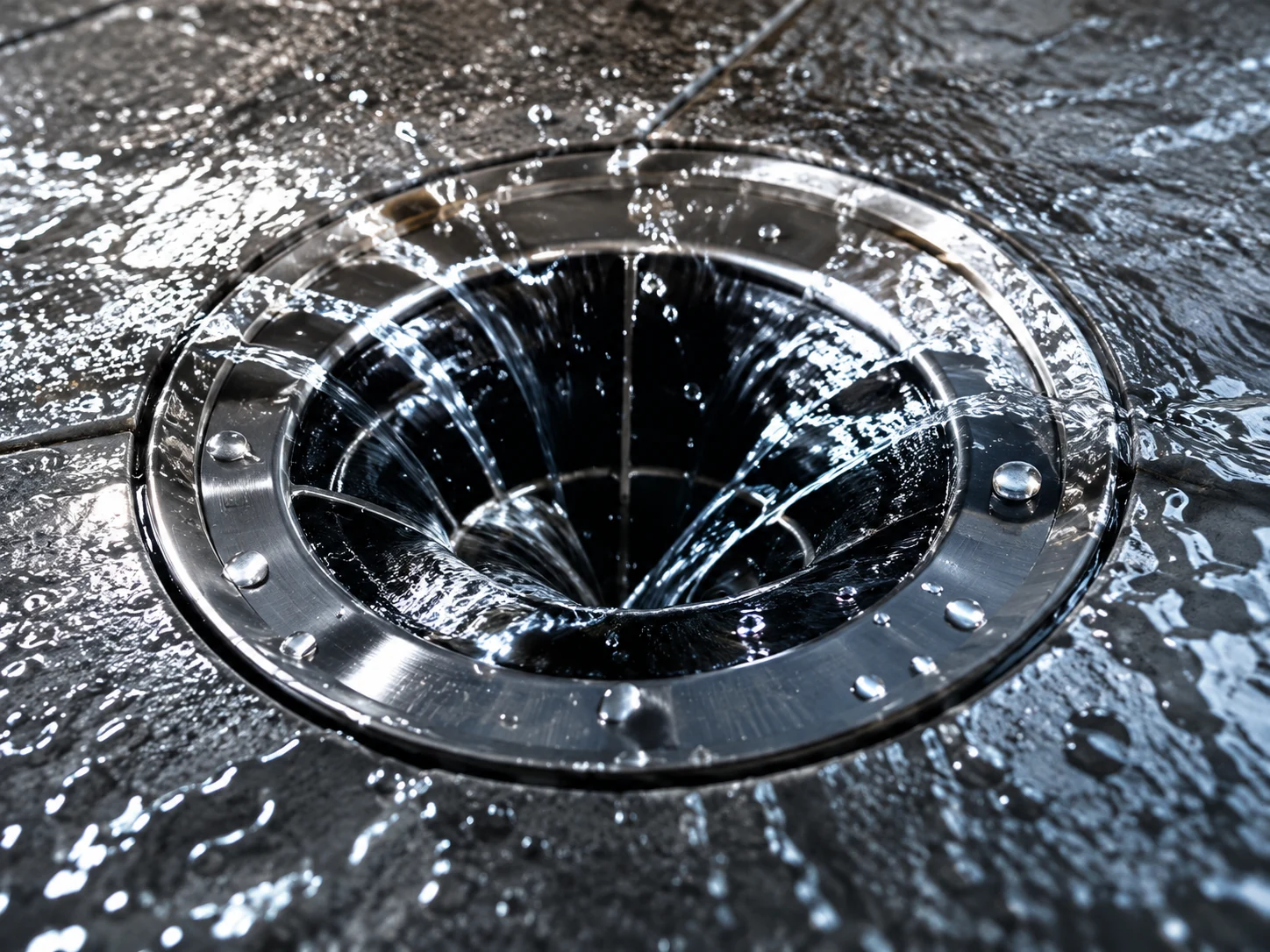
Slow sink, gurgling toilet or wastewater where it should not be? Get clear, practical help to identify a blockage and choose the right next step.
A blockage can come from different sources. The next step depends on the location, symptoms and condition of the drain.
concept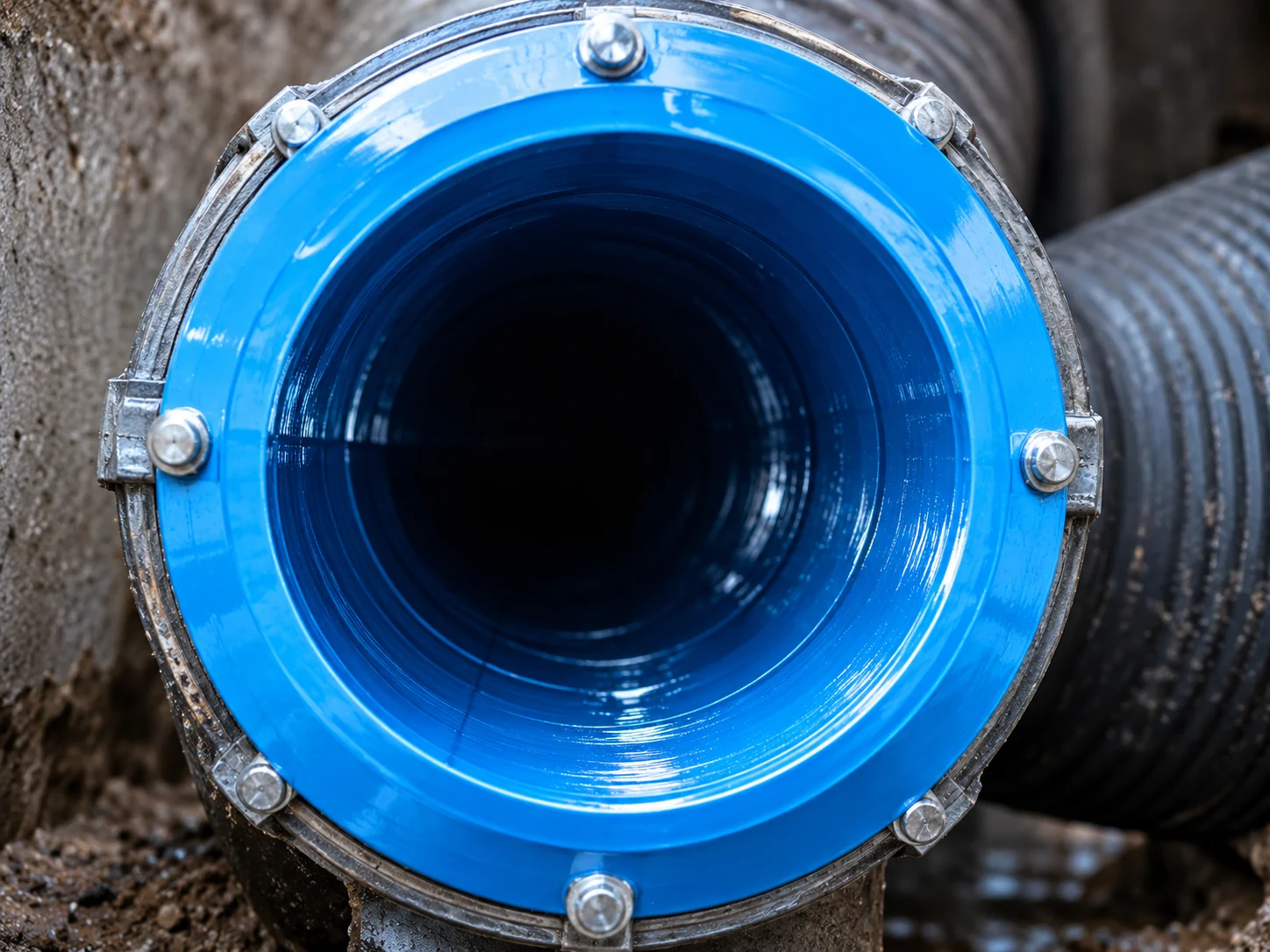 concept
 concept
 conceptconcept
 concept
A blocked drain can start as an annoying slow sink and quickly turn into a messy problem. If water is lingering in a basin, a toilet is gurgling, or several fixtures are draining slowly, it is worth acting before wastewater backs up into the home or business.
Grade A Plumbing helps Melbourne homeowners, tenants, landlords, property managers and businesses with blocked-drain enquiries. The first aim is to work out which part of the drainage system is affected, clear the immediate obstruction where appropriate, and identify whether there is an underlying pipe issue that needs attention.
For help with a blocked drain, call Grade A Plumbing on (02) 5837 5457 or email support@gradeaplumbing.store. Emergency plumbing assistance is available 24/7 where available; if wastewater is overflowing, explain that clearly when you call.
A complete stoppage is obvious, but many blockages build up gradually. Water that drains more slowly than normal, a recurring smell near an outlet, bubbling sounds, or a toilet bowl level that changes after another fixture is used can all be early warning signs. One slow basin may be a local blockage, while trouble at more than one fixture can point to a shared drain further along.
Notice where the symptom occurs and when it happens. For example, a shower that fills while the washing machine empties, or a toilet that gurgles when the kitchen sink is drained, gives useful clues about the pathway water is taking. That information helps narrow down the affected line without guessing at the cause.
A drain does not need to be fully closed to need attention. Repeated slow drainage usually means material is still restricting the pipe, and using more water can turn a partial blockage into a backup. Keeping a simple note of the fixtures affected and any recent changes can help with assessment.
These symptoms do not prove one particular fault, but they help show how urgent the problem may be.
| What you notice | What it can suggest | What to do now |
|---|---|---|
| One sink or basin drains slowly | A build-up close to that fixture, such as food residue, soap or hair | Stop putting more material down that outlet and arrange assessment if it persists |
| Several fixtures are slow or gurgling | A restriction in a shared household drain rather than one trap | Limit water use and note which fixtures affect each other |
| A toilet is slow to flush or its bowl level changes | A toilet branch or downstream sewer drain may be restricted | Avoid repeated flushing; use another toilet only if it is clearly unaffected |
| Drain odour indoors or outside | Standing waste, a partial blockage or a drainage fault | Ventilate the area, keep the outlet unused if possible and seek advice |
| Wastewater appears outside or inside | A serious blockage or overflow requiring prompt attention | Keep people away, stop water use and report the overflow when calling |
If it is unclear whether a sewer blockage is in private pipework or the water retailer's asset, the location needs to be determined before the responsible party can be identified.
In a kitchen, fats, oils and grease can cool and cling to pipe walls. Food scraps, coffee grounds and fibrous peelings can then collect in that sticky layer. A sink may still appear to drain at first, but the opening inside the pipe becomes smaller over time.
Bathroom products cause a different kind of build-up. Hair catches around grates and within pipe bends, then holds soap residue, toothpaste and other debris. In laundries, lint and residue from washing can also contribute where the drainage is already slow or poorly flowing.
Toilets and sewers are often affected by items that do not break down as toilet paper does. Wipes, sanitary items, cotton buds, nappies, cloths and small objects can lodge in bends or join with other debris. South East Water advises putting only water, human waste and toilet paper into the sewer, and binning items such as fats, food scraps and all wipes, including those labelled flushable.
A bathroom blockage is often local to one fixture, but these details help distinguish a simple surface build-up from a wider drainage issue.
A toilet blockage may be in the pan, the branch drain serving that toilet, or further down the property sewer. Repeated flushing can cause the bowl to overflow if the outlet cannot take the volume away. If the water level is high or wastewater has appeared elsewhere, stop using that toilet and limit water use across the property.
A sewer drain carries wastewater away from several fixtures, so a blockage there can affect toilets, showers, basins and floor wastes together. In Melbourne, the boundary between private pipework and a water retailer's asset is not something to assume from a map or a neighbour's experience. It depends on the property connection and the exact location of the problem.
A licensed plumber can investigate the affected drainage line and determine whether the obstruction appears to be within private pipework or needs to be referred to the relevant water retailer. Victorian drainage work includes the repair, maintenance and relining of below-ground sanitary drainage, and it should be handled in line with the applicable Victorian plumbing requirements.
If sewage or wastewater is overflowing, keep children and pets away and avoid contact with the water. Do not keep flushing toilets or run taps, showers, dishwashers or washing machines, as added water can worsen the overflow.
If water has reached electrical outlets, appliances or extension leads, do not touch electrical equipment while standing in water. Keep clear of the affected area and arrange urgent plumbing help; contact an appropriate electrical professional if electrical safety may be affected.
Tree roots naturally seek moisture and can enter a drain through small gaps, failed joints or existing damage. Once inside, fine roots can catch paper and waste. Cutting roots may restore flow, but it does not necessarily remove the gap or weakness that let them in.
Recurring blockages at the same part of a property, especially where older drains and established trees are present, are a reason to investigate rather than only repeat a clearance. A camera inspection may reveal root intrusion, a displaced joint, cracking, a sag in the line or another condition that changes the repair options.
Do not assume a nearby tree is the cause without evidence. The right response depends on where the roots are, the condition and route of the drain, access to the pipe and who owns the tree. South East Water notes that tree roots can cause sewer blockages and recommends contacting the water authority when a property with a history of root problems has a blockage.
conceptThe right clearing method depends on what is causing the blockage. We explain the assessment and available options before work goes ahead.
The practical sequence is to control the immediate problem first, then make decisions based on the condition and location of the pipe.
Say which fixtures are affected, whether there is an odour or overflow, and whether the problem has happened before. This helps indicate whether the restriction may be local or on a shared drain.
Avoid adding water to a line that is not clearing. For a serious backup, do not use nearby fixtures until the situation has been assessed.
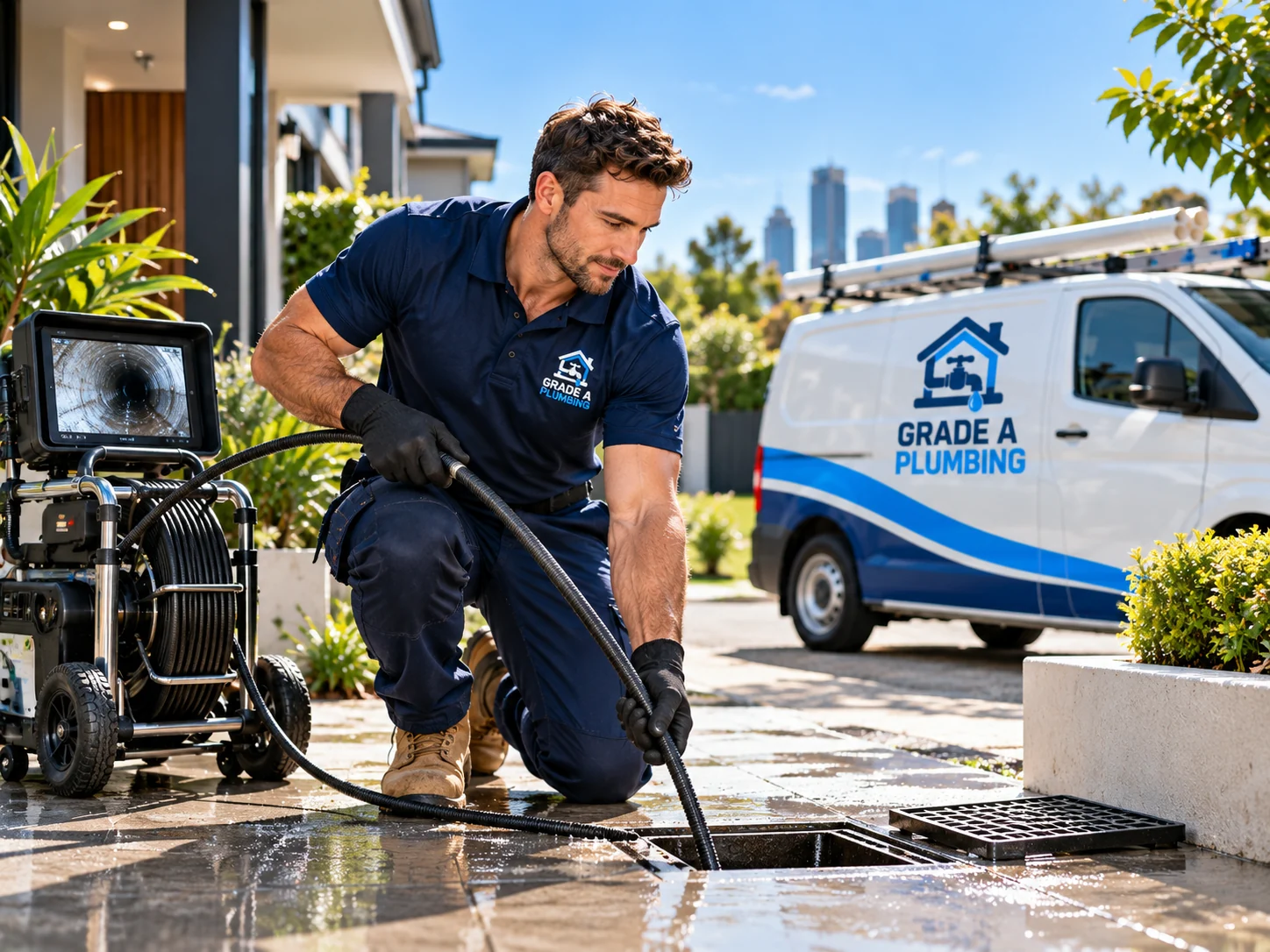
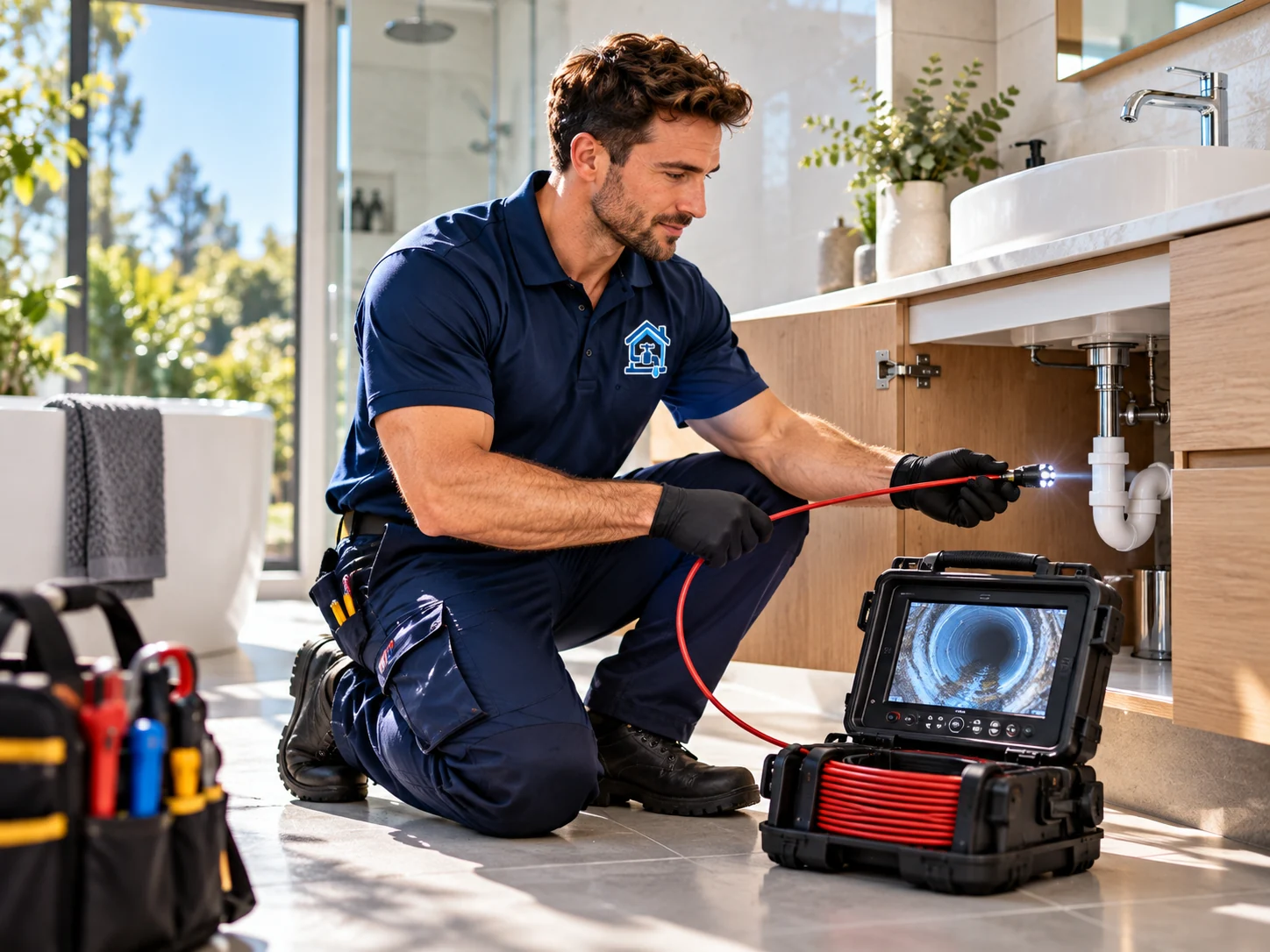
Access points, flow behaviour and, where useful, a CCTV drain camera can help identify the line involved and show whether a physical defect may be present.
Drain jetting or drain cable equipment may be considered depending on the material, pipe condition, access and the nature of the blockage. The aim is to restore flow without treating a damaged pipe as though it were sound.
If there is damage, repeated root intrusion or a collapsed section, the assessment can set out options such as targeted sewer repair, replacement or pipe relining where suitable. A firm price requires the work to be assessed.
A CCTV drain camera is a small camera passed through a suitable access point to view the inside of a pipe. It may be used to locate a blockage or identify root intrusion, cracks, displaced joints, standing water or an obstruction that cannot be understood from the surface. The footage can help distinguish a drain that simply needs clearing from one that may need repair.
Drain jetting uses pressurised water through a specialised hose and nozzle to break up or move material from within a drain. It can be useful for grease, sludge and some root-related debris, depending on the pipe and the obstruction. It is not a promise that a structurally damaged line will remain clear after the job.
Drain cable equipment uses a flexible cable and appropriate cutting or clearing head to work through some obstructions. It may be useful where the blockage is concentrated or access is limited. A cable can clear a path, but it cannot by itself confirm pipe condition, which is why follow-up inspection can be sensible for recurring issues.
Clearing a drain deals with what is stopping flow at that time. A sewer repair is considered when the line has a defect such as a broken section, failed joint, significant displacement, collapse or repeated intrusion that cannot reasonably be managed by clearing alone. The repair approach should follow an assessment of the pipe's location, depth, access and condition.
Pipe relining is a trenchless repair option in which a new lining is formed inside an existing pipe. It may reduce the need to excavate along the full length of a suitable pipe, but it is not automatically suitable for every drain. Severe collapse, unsuitable access, pipe layout and the amount of damage can alter the recommended approach.
Targeted excavation and replacement may be appropriate when a damaged section needs direct access, or when relining cannot address the underlying issue. For either option, make sure the scope explains what part of the line is being addressed and what evidence supports the recommendation. For related work, see the Sewer Repairs and Pipe Relining pages.
The right price depends on the work found, not just the symptom you can see from a sink or toilet. A straightforward local obstruction is different from a blockage in a buried sewer drain, a line that needs camera investigation, or a pipe with recurring roots and structural damage. A firm price requires the work to be assessed.
Access can also change the work involved. The location of inspection points, the length and route of the drain, whether pipework is beneath paving or landscaping, and whether multiple fixtures share the affected line all matter. Urgent overflow conditions and any repair needed after clearance should be discussed as part of the assessment rather than assumed from a generic quote.
For landlords and property managers, clear records of the symptoms, tenancy reports, previous drain work and any available plans can help establish the next step. For tenants, report a blockage promptly to the rental provider or property manager, especially if there is an overflow or a toilet cannot be used.
Not every blockage can be prevented, particularly when a buried pipe is damaged, but these habits reduce common household causes.
We do not publish fixed prices, because the right figure depends on what is actually found on site. These are the factors that shape a quote, and the proposed scope and price are explained before agreed work proceeds.
A local sink blockage is different from a restriction in a shared or buried sewer drain. Overflowing wastewater or multiple affected fixtures can change the work needed to make the area safe and restore flow.
Where the cause or location is unclear, access-point checks and a CCTV drain inspection may be needed to identify the right course of action. This is particularly relevant for repeated blockages or suspected pipe damage.
The material causing the blockage, the pipe's condition and the available access influence whether drain jetting, cable equipment or another approach may be appropriate. A damaged line can require more than a simple clearance.
Accessible inspection points and a known pipe route can simplify assessment. Work can be more involved when the affected line is difficult to reach or is beneath hard surfaces, landscaping or structures.
Repeated root intrusion, cracking, displaced joints or collapse can mean repair, replacement or relining needs to be considered after the blockage is cleared. The suitable option depends on the evidence from the assessment.
The length and location of pipework being repaired, the method selected and any restoration needed after access work affect the overall scope. Ask for the proposed work and its limits to be explained before a repair proceeds.
Every business prices this work differently, and the figure depends on the assessment outcome, access, parts and whether attendance is outside standard hours. Ask for the proposed scope and price before work starts.
If your situation is urgent, call first to discuss availability and the safest next step.
Treat wastewater backing up inside or outside, a toilet that may overflow, or several fixtures that cannot drain as urgent. Stop adding water to the affected drainage system and explain the overflow or multi-fixture symptoms when you call. A single slow basin is usually less immediate, but it should still be assessed if it persists or keeps returning.
Chemical products may not reach or remove a solid obstruction, roots or a defect further down the line. They can also create a hazard for anyone working on the drain afterwards, particularly if the product remains in standing water. Avoid adding chemicals to a drain that is backing up, and tell the plumber if any product has been used.
That can happen when water moving through a shared drain is restricted and air cannot move normally through the system. It may indicate a partial blockage downstream of the fixtures rather than a fault in the toilet alone. Avoid repeated flushing if the toilet bowl level is rising or changing unexpectedly.
A CCTV drain camera may show the inside condition of accessible pipework, including a blockage, roots, cracks, displaced joints, standing water or an obstruction. It can help locate the point of concern and support a recommendation for clearing, monitoring or repair. Camera access and the quality of the view depend on the pipe and available entry points.
Drain jetting uses pressurised water to move or break up material in a drain, while cable equipment mechanically works through certain obstructions with a flexible cable and a suitable head. Neither is universally right for every pipe or blockage. The condition of the pipe, the material involved and safe access influence which option may be considered.
Not necessarily. Roots usually enter through an opening or weakness in the pipe, so clearing them can restore flow without removing the entry point. If roots recur, an inspection can help identify whether the drain has a defect that requires repair, replacement or a suitable relining option.
No. Responsibility depends on the exact location of the blockage and the relevant water retailer's asset boundary or property connection arrangements. If it is not clear where the fault sits, a licensed plumber can investigate the line and help determine whether it is private pipework or should be referred to the water retailer.
Sometimes. Pipe relining may be an option for a suitable damaged pipe and can avoid excavation along its full length, while a targeted repair may need a smaller excavation at the damaged section. The pipe's condition, layout, access and the type of fault determine what is practical.
Tell the rental provider or property manager promptly, particularly if the toilet cannot be used, wastewater is overflowing or more than one fixture is affected. Provide practical details such as the fixtures involved, when it began and whether the problem has happened before. Limit water use where drainage is backing up while the next step is arranged.
The cleared material may have been a symptom rather than the underlying cause. Grease build-up, recurring root intrusion, a damaged joint, an incorrect fall or another pipe condition can create the same restriction again. If the same line keeps blocking, an investigation such as CCTV inspection can provide evidence for a longer-term decision.
General plumbing, safety and compliance guidance on this page was checked against the following Australian sources. Nothing on this page replaces an on-site assessment.
Current availability depends on location and bookings. For immediate danger, contact emergency services.
Browse listed suburbs and contact us to confirm current availability.